
How to Date a Farmer: Honest Guide for 2026
Everything you need to know about building a real relationship with someone who works the land, from seasonal schedules to 4 AM alarms.
Read More →The alarm goes off at 4 AM. The cows don't care that it's your anniversary. Here's what farm couple life actually looks like - and why so many people say it's the most honest love they've ever known.
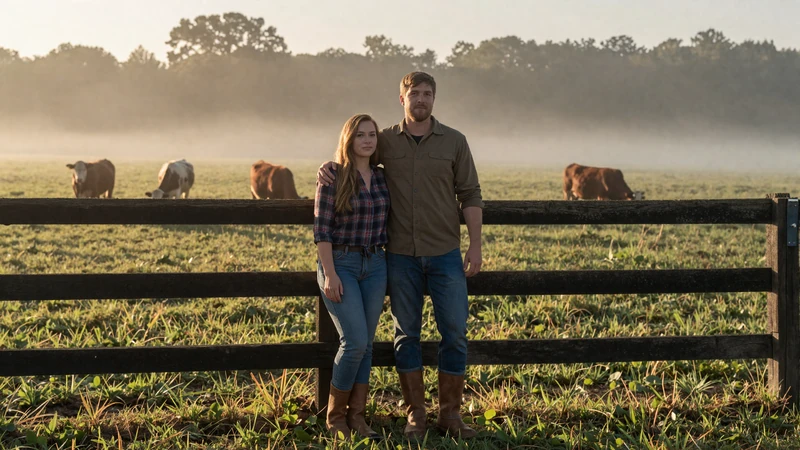
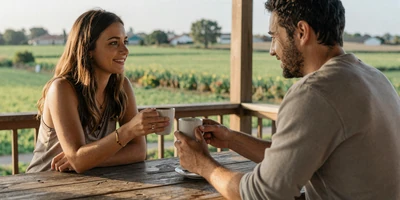
There's a reason the phrase "marry a farmer" carries weight in rural America. It's not just a marriage - it's a commitment to a way of life that most people only see in Instagram photos of golden fields and barn weddings. The reality involves mud, machinery breakdowns, financial stress from unpredictable weather, and the kind of bone-deep exhaustion that no city job can replicate. But it also involves sunrises shared over coffee on the porch, raising children who understand where food comes from, and a partnership built on something more tangible than shared Netflix preferences.
This article is for anyone who's dating a farmer, considering it, or already knee-deep in the farm couple lifestyle and wondering if what they're experiencing is normal. Spoiler: it probably is. And our complete guide to dating a farmer covers the early stages if you're just getting started.
Understanding farm relationships starts with understanding the schedule - because the schedule is everything. A typical day on a working farm doesn't leave much room for spontaneity, and that's something every partner learns fast. Here's what a real day looks like for most farm couples across the Midwest and South.
| Time | What's Happening | Relationship Reality |
|---|---|---|
| 4:00-5:00 AM | Wake up, first coffee, check weather and market prices | This is often the only quiet moment together before the day explodes |
| 5:00-7:00 AM | Feed livestock, milk cows, morning chores | Working side by side builds a bond words can't - or one partner handles the house and kids |
| 7:00-12:00 PM | Fieldwork, equipment maintenance, deliveries | Minimal contact - a quick text or a wave across the field is the love language here |
| 12:00-1:00 PM | Lunch break - sometimes together, sometimes a sandwich in the tractor cab | If you eat together, protect this time. It might be the only real conversation until evening |
| 1:00-6:00 PM | More fieldwork, vet calls, supply runs, bookkeeping | The non-farming partner often handles errands, kids' activities, and farm admin |
| 6:00-8:00 PM | Evening chores, dinner, cleanup | This is couple time - but exhaustion is real. Grace matters more than grand gestures |
| 8:00-9:00 PM | Planning tomorrow, brief rest, early bed | Falling asleep on the couch together counts as quality time. Seriously. |
What does this mean in practice? It means romance on a farm looks different from what magazines sell. A 2025 study by Iowa State University Extension found that farm couples average just 47 minutes of dedicated one-on-one time per day during active seasons - compared to 2.3 hours for urban couples. But here's the counterpoint: those 47 minutes tend to be more intentional. When time is scarce, you stop wasting it on small talk and surface-level conversation.
"People ask how we stay connected when he's gone from dawn to dark. The answer is - we work together. I bring lunch to the field. He texts me pictures of the sunset from the combine. It's not fancy, but it's ours." - Rachel, 38, married to a soybean farmer in Illinois
The couples who make it don't fight the schedule - they build their relationship inside it. That might mean making the 4 AM coffee together a daily ritual, or using the drive to the local co-op in Iowa as a chance to talk. It's unglamorous. It's also remarkably honest.
Farming isn't just a job - it's a calendar that dictates the emotional rhythm of your relationship. Every farm couple knows there are two modes: the intense seasons (spring planting, fall harvest) and the quieter months between. Each one demands something different from both partners.
During planting (March-May) and harvest (September-November), a farmer may work 16-hour days for weeks straight. According to the American Farm Bureau Federation, 68% of farm operators report working more than 70 hours per week during peak seasons (AFBF, 2025). That's not a typo. For the partner at home, this period feels like single parenting - managing the household, handling finances, and keeping life running while your person is essentially unreachable.
The emotional toll is real. Loneliness spikes. Resentment can creep in if expectations aren't set early. The partners who handle it best are the ones who reframe the season: this isn't abandonment, it's the family business operating at full capacity. You're both working toward the same goal - one in the field, one holding everything else together.
Then winter arrives, and the whole dynamic shifts. Suddenly, the farmer who's been gone since April is home. There's time for late breakfasts, town trips, and actually finishing a conversation. Many farm couples describe winter as their "second honeymoon" period - a chance to remember why they chose each other. Equipment maintenance and livestock still need attention, but the crushing urgency lifts. This is the season for date nights, family projects, and the kind of slow mornings that make everything worth it.
But there's a catch: the transition isn't always smooth. After months of operating independently, both partners have to readjust to sharing space and decisions again. Our article on seasonal dating challenges breaks down specific strategies for navigating these shifts without conflict.
January-February: Deepest connection time. Plan important conversations, trips, and relationship check-ins here. March-May: Transition to independence. Set clear expectations before planting starts. June-August: Moderate - crop maintenance is steady but not peak. Good window for a short vacation. September-November: Full harvest mode. Protect small daily rituals. December: Recovery and gratitude. Celebrate what you built together that year.
Every farm couple we've spoken to - across 19 states on our platform - circles back to the same core principles. These aren't abstract theories. They're lessons learned through calving season arguments, tractor breakdowns on anniversary weekends, and the quiet resilience that comes from choosing this life together.
Farm income is seasonal and unpredictable. A hailstorm can wipe out a year's profit in 20 minutes. Couples who survive financially are the ones who budget during good years, not just bad ones. Sit down every January and plan together. Transparency about farm finances builds trust faster than anything else.
Some partners want to drive tractors. Others prefer managing the books or running a farmstand. Both are equally valuable. The key is choosing your involvement level honestly - not performing a role you resent. A 2025 USDA survey found that 44% of farm operations now list a spouse as a co-operator or key decision-maker, up from 31% in 2015.
It can be small - morning coffee, a Sunday drive, a phone call at lunch. Whatever it is, guard it. During the chaos of peak season, that one consistent touchpoint becomes your anchor. Couples who have a daily ritual report 34% higher relationship satisfaction than those who don't (Gottman Institute, 2024).
The farm can consume everything if you let it. Maintain friendships. Join a book club, a church group, a bowling league - anything that gives you an identity beyond "the farmer's wife" or "the farmer's husband." Individual fulfillment strengthens the partnership, not weakens it.
Quality time on a farm isn't candlelit dinners and weekend getaways (though those matter too). It's riding together to check fences. It's watching the sunset from the porch after a 14-hour day. It's waking up at midnight to help with a calving. If you're only counting "date night" hours, you'll always feel shortchanged. If you count the shared purpose - the building of something together - the math changes entirely.
Will the farm stay in the family? Are kids expected to take over? What happens if one partner wants to leave? These conversations are uncomfortable but essential. The farms that survive generationally are the ones where couples plan together, not where one person assumes and the other resents. Check out our country date ideas for ways to connect that don't require leaving the property.
Yes - but not in the way most people expect. The difficulty isn't the work itself, it's the unpredictability. Plans change because a storm is coming or a cow is calving. The partners who thrive are the ones who value flexibility and understand that canceled plans don't mean canceled love. According to a 2025 Farm Journal survey, 79% of farm spouses said the first year was the hardest, but 83% said they'd choose the same life again.
Above all, farmers value someone who's honest, adaptable, and willing to understand (not necessarily participate in) the farming lifestyle. Independence matters - a farmer needs a partner who can handle being alone during busy seasons without feeling abandoned. Shared values around family, hard work, and community consistently rank higher than shared hobbies or education level in surveys of rural singles.
Absolutely - but it requires genuine openness to change. The transition from city to farm life is significant: different pace, different social dynamics, different daily rhythms. Successful city-to-farm partners usually take it in stages - visiting frequently before committing, learning one skill at a time, and maintaining connections to their previous life. The key is wanting to be there, not just tolerating it for the relationship.
Everything you need to know about building a real relationship with someone who works the land, from seasonal schedules to 4 AM alarms.
Read More →
How planting and harvest seasons reshape your love life - and practical strategies for staying connected through the busiest months.
Read More →
From fishing at dawn to stargazing on the tailgate - creative date ideas that celebrate the beauty of country living.
Read More →