
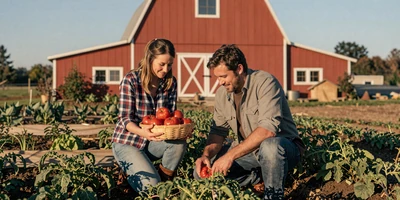
Life on the Farm and Relationships
The daily reality of farm life shapes every relationship. From 4 AM alarms to seasonal rhythms, here is what it actually looks like to love a farmer.
Read More →When your livelihood depends on weather and harvests, your love life runs on a calendar most people don't understand. Here's how to date when the farm comes first.
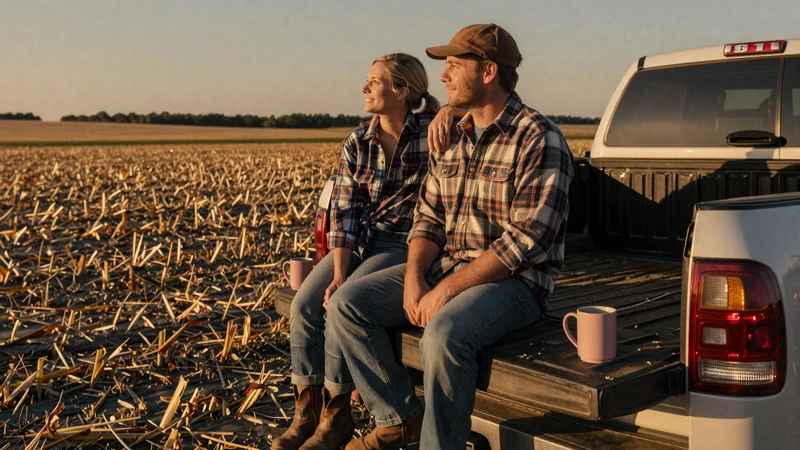
Is it hard to date a farmer? The honest answer is yes - but not for the reasons most people assume. It's not the dirt, the early mornings, or the isolation that kills relationships. It's the seasonal dating challenges that nobody warns you about. Farming follows a rigid calendar dictated by weather, soil, and biology, and that calendar doesn't pause for anniversaries, Valentine's Day, or the fact that you haven't had a real conversation in three weeks.
A 2025 Farm Bureau survey found that 61% of single farmers said seasonal workload was their biggest barrier to dating (American Farm Bureau Federation, 2025). That's not a personality flaw - it's a structural reality. Understanding the farm calendar is the first step toward building a countryside romance that actually survives it. Whether you're already dating a farmer or considering it through a farmer dating site like LoveLocalPEI, this guide maps out the year so you know exactly what you're signing up for.
Spring planting season is the most demanding stretch of the farming year, and it's also the period most likely to wreck a new relationship. From mid-March through late June - depending on the state and the crop - a farmer's entire existence narrows to one goal: getting seed in the ground before the weather window closes. According to USDA data, corn and soybean farmers in the Midwest plant roughly 90% of their acreage in a 4-6 week sprint (USDA NASS, 2025). During that sprint, 16-hour days are normal. Eighteen isn't unusual.
What does this mean for your relationship? It means canceled plans, unanswered texts, and a partner who falls asleep at 8:30 PM with mud still on their boots. It's not rejection - it's exhaustion. The difference between couples who survive planting season and those who don't comes down to expectations. If you expect a normal dating rhythm during planting, you'll feel abandoned. If you understand it as a temporary, intense work phase - like a surgeon during residency or a CPA during tax season - you can adapt.
"I told her straight up: 'From April to June, I'm basically a ghost. It doesn't mean I don't care - it means I'm keeping the farm alive.' She said, 'Okay, I'll bring you sandwiches.' That was three years ago. We're getting married in December." - Matt, 38, grain farmer in Iowa
The partners who make it through planting season share a few common strategies. They send short voice messages instead of expecting long phone calls. They show up at the field with food - not to "help" but to be present for fifteen quiet minutes. They don't take silence personally. And critically, they use the brief windows - a rainy day, a Sunday morning - to reconnect without pressure. For deeper insights on navigating these rhythms, our guide on life on the farm and relationships breaks down the daily reality in detail.
Harvest season is planting's mirror image - equally intense, but with higher stakes. A late harvest can mean the difference between profit and loss for the entire year. Farmers don't choose to work until midnight during October; the weather forces their hand. Every dry day is a gift, every rainy day is a setback, and the emotional pressure is enormous.
The emotional weight of harvest goes beyond just long hours. There's financial anxiety - will the crop price hold? There's physical exhaustion - combine operators often skip meals. And there's an unspoken guilt that many farmers carry: the knowledge that their partner is alone, again, on another Friday night. That guilt doesn't help anyone. What helps is honest communication before harvest starts - setting realistic expectations about availability, agreeing on minimum touchpoints (even a two-minute goodnight call counts), and having something concrete to look forward to once the combines park for winter.
Here's where it gets interesting: harvest season can actually strengthen a relationship if both people approach it right. Partners who participate - even just driving a grain cart or bringing dinner to the field crew - report feeling more connected, not less. A 2024 study from Iowa State University Extension found that couples who shared at least one harvest task together rated their relationship satisfaction 34% higher than those who stayed separate during the season. You don't need to operate machinery. You need to show up.
Winter is the farmer's dating season - and most people outside agriculture have no idea. From December through February, the fields are dormant, livestock chores settle into predictable routines, and for the first time in months, a farmer has something extraordinary: free evenings. The pace slows. The pressure lifts. And the loneliness that's been building since March finally has room to be addressed.
This is why January and February see the highest registration rates on farmer dating platforms - LoveLocalPEI included. The combination of post-harvest relief, holiday loneliness (Thanksgiving and Christmas hit hard when you're eating alone), and long dark evenings creates a perfect storm of motivation. According to our internal data, farmer profile creation spikes 2.4x in January compared to the annual average. New Year's resolutions about finding love aren't just a cliché for farmers - they're backed by the calendar finally cooperating.
Winter dates on a farm have a charm that summer can't match. A firepit under cold stars. Cooking together with ingredients you grew yourself. Driving through snow-covered fields with the heater on and country radio playing. There's an intimacy to winter that busy summer months can't replicate - fewer distractions, longer conversations, and nowhere either of you needs to rush off to. For more ideas, see our country date ideas for rural couples.
The bottom line: if you're thinking about joining a farmer dating site, winter is your strategic advantage. Farmers are available, emotionally open, and actively looking. The competition for attention is lower because city-based dating apps see their own seasonal cycles. Signing up in January on a platform like LoveLocalPEI puts you in front of farmers who finally have time to invest in getting to know someone.
Spontaneity is a luxury most farmers can't afford. The couples who build lasting countryside romance learn to treat date planning the way farmers treat crop planning - with strategy, flexibility, and respect for the weather. Here's a seasonal approach that actually works.
Sit down with your farmer at the start of the year and mark the big blocks: planting window, first cutting of hay, harvest dates, livestock cycles. Then circle the gaps - those are your dating windows. Treat them as sacred. Write them on the kitchen calendar in permanent marker.
Rain shuts down fieldwork but opens up possibility. Keep a running list of low-effort date ideas - a movie, a home-cooked meal, a drive to the nearest town for ice cream. When rain hits, you're ready. Some of the best farm couple memories happen on days the weather "ruined."
A date doesn't have to be dinner at a restaurant. Riding along in the tractor cab during a quiet afternoon counts. Fixing a fence together and sharing a thermos of coffee counts. Sitting on the porch after chores watching the sun go down counts. Lower the bar for format, raise the bar for presence.
Even during the busiest season, commit to one small ritual that doesn't get canceled - Sunday morning breakfast, a Wednesday night phone call, a shared playlist you both add songs to. It doesn't need to be big. It needs to be consistent. Consistency is how trust survives the chaos of farming.
Anniversaries, vacations, and family gatherings belong in winter or early spring. Trying to squeeze a week-long trip into July is a recipe for stress. The smartest farm couples front-load their quality time into December-March and accept that summer is for working side by side, not getaways.
The hardest part of seasonal dating challenges isn't the busy periods - it's the quiet ones. Between planting and harvest, between the adrenaline and the exhaustion, there's a stretch where the farm hums along on autopilot and the silence becomes deafening. This is when loneliness hits hardest for single farmers. The work is still there, but the urgency fades, and suddenly there's time to notice that you're eating dinner alone. Again.
Rural isolation compounds the problem. A 2025 report from the National Rural Health Association found that 43% of rural adults experience moderate to severe loneliness, compared to 28% in urban areas. For farmers specifically, the numbers are worse - geographic distance from potential partners, limited social venues, and the stigma of admitting loneliness in a culture that prizes self-reliance all create barriers. Our deep dive into how to date a farmer explores why understanding this isolation is essential for anyone entering a relationship with someone on the land.
What does this mean in practice? It means the transition periods - late June through August, and again in late November - are when farmers most need connection. Not grand gestures. Just someone who texts back, who asks how the day went, who remembers that the hay field got cut last week. Platforms like LoveLocalPEI exist specifically to bridge this gap - connecting rural singles who share the same calendar, the same rhythms, and the same understanding that "I can't talk right now" doesn't mean "I don't care."
| Season | Months | Farm Workload | Dating Availability | Best Approach |
|---|---|---|---|---|
| Spring Planting | Mar - Jun | Extreme (14-18 hr days) | Very Low | Quick check-ins, field visits, patience |
| Summer Maintenance | Jul - Aug | Moderate (10-12 hr days) | Moderate | Evening dates, rain day adventures |
| Fall Harvest | Sep - Nov | Extreme (12-16 hr days) | Low | Shared harvest tasks, weekend mornings |
| Winter Rest | Dec - Feb | Light (6-8 hr days) | High | Real dates, trips, deep conversations |
The seasonal dating challenge isn't a problem to solve - it's a rhythm to learn. The farmers who find lasting love don't fight the calendar. They work with it. And the partners who stay aren't the ones who demand a normal schedule - they're the ones who see the beauty in a life that follows the seasons, and choose to follow along.
Ready to connect with someone who gets it? Browse farmers by state on LoveLocalPEI, or explore our guide to long-distance rural relationships for more strategies on making it work across miles and months.
The daily reality of farm life shapes every relationship. From 4 AM alarms to seasonal rhythms, here is what it actually looks like to love a farmer.
Read More →
Everything you need to know about building a real relationship with someone who works the land, from seasonal schedules to 4 AM alarms.
Read More →
When the nearest single person is 40 miles away, love takes patience, planning, and a good cell signal. Practical advice for making rural distance work.
Read More →Yes, but not because farmers are difficult people. The challenge is structural: farming follows a rigid seasonal calendar with planting (March-June) and harvest (September-November) consuming nearly every waking hour. During these windows, dating takes a back seat. The couples who succeed learn to align their relationship rhythm with the farming calendar - maximizing connection during winter months and maintaining small, consistent touchpoints during busy seasons.
Winter - specifically December through February - is the best time to start a relationship with a farmer. Fieldwork slows dramatically, livestock chores settle into predictable routines, and farmers have free evenings for the first time in months. January sees the highest registration rates on farmer dating platforms, making it the ideal time to connect with motivated, available singles in your area.
Most successful farm couples set expectations before harvest begins. They agree on minimum communication touchpoints (a goodnight text, a Sunday morning call), accept that in-person dates will be rare for 8-10 weeks, and find small ways to participate - like bringing meals to the field. Partners who frame harvest as a temporary team effort, rather than a personal rejection, report significantly higher relationship satisfaction.
They do. First-year farm relationships have the steepest learning curve because the seasonal intensity surprises partners who haven not experienced it. By the second or third year, couples develop routines, shared expectations, and a rhythm that feels natural. Many long-term farm couples say that surviving the first full farming cycle together - planting through harvest through winter - is the true test, and passing it creates a bond that is unusually strong.