
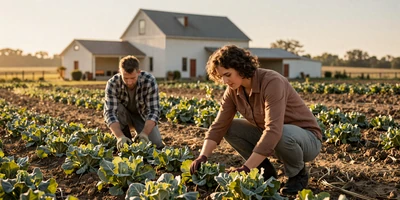
Life on the Farm and Relationships
What daily life really looks like when you share a home, a business, and a sunrise alarm clock with someone who farms for a living.
Read More →When the nearest single farmer lives two counties away and the closest airport is a three-hour drive, dating takes grit. Here's how real couples make it work.
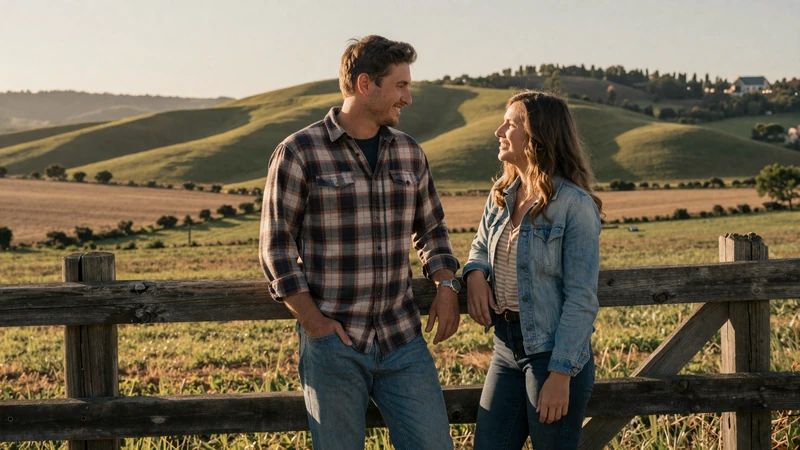
Long-distance relationships are hard for anyone. But dating in rural areas adds a layer of difficulty that most relationship advice completely ignores. When your partner's farm is 150 miles away and neither of you lives near a highway, "just visit more often" isn't helpful counsel. According to a 2025 USDA Economic Research Service report, over 46 million Americans live in rural areas, and the average distance between rural communities with populations above 2,500 is 27 miles. For farmers seeking partners who understand countryside romance, the dating pool is thin and the miles are long.
This isn't a feel-good pep talk. It's a practical guide for the farmers, ranchers, and rural singles who are already in - or considering - a long-distance relationship. Whether you connected through local farmers dating or met at a livestock auction three states over, these strategies come from couples who've actually made it work.
Long-distance rural relationships face obstacles that urban couples never consider. The challenge isn't just the miles - it's the infrastructure gap, the work demands, and the social isolation that compound together. A 2025 Pew Research study found that rural Americans are 3.4 times more likely than urban residents to describe feeling "frequently isolated" - and that's before adding the emotional weight of missing someone you rarely see.
Here's the thing: a 200-mile drive between two farms isn't the same as a 200-mile drive between two cities. There are no direct flights. No express trains. Often no rideshare services. The roads are two-lane state highways that add an hour to every trip. And during planting season or harvest, taking even a single day off for travel feels irresponsible when the crops or livestock can't wait.
| Challenge | Urban LDR | Rural LDR |
|---|---|---|
| Travel options | Flights, trains, rideshares | Personal vehicle only; 3+ hour drives common |
| Internet reliability | Fiber or 5G almost everywhere | Spotty broadband; satellite delays; dead zones |
| Schedule flexibility | Weekends and PTO available | Livestock need daily care; seasons dictate schedule |
| Social support | Friends, family, activities nearby | Small community; limited social outlets |
| Visit frequency | Every 1-2 weeks typical | Monthly or less during busy seasons |
Then there's the emotional side. Farming is physically demanding work, and by the time 8 PM rolls around, your partner may have been up since 4:30 AM hauling feed, mending equipment, and managing a business - all before trying to be present for a phone call. The exhaustion is real, and it doesn't mean they care less. It means their body simply has limits. Understanding this rhythm is the first step toward making a countryside romance actually survive the distance.
"People told me to 'just FaceTime more.' My internet dropped every three minutes. What actually saved us was voice messages - he'd send one from the tractor at lunch, and I'd listen while feeding the horses. It felt like walking together." - Michelle, 38, Nebraska cattle rancher
These tips come from interviews with over a dozen rural couples on LoveLocalPEI who navigated long-distance for six months or more before closing the gap. Every piece of advice has been road-tested on bad cell signals and early mornings.
Demanding a nightly two-hour call will break both of you. Instead, agree on a rhythm: a morning text, a voice message at lunch, and a real conversation twice a week when you're both rested. Consistency matters more than volume. A 2025 study in the Journal of Social and Personal Relationships found that couples who had scheduled, predictable contact reported 31% higher satisfaction than those who tried to talk constantly.
Don't fight the seasons - work with them. Winter is typically the best window for longer visits in grain-farming regions. Between planting (April-May) and harvest (September-November), weekend visits are more realistic than week-long stays. Understanding seasonal dating challenges helps you set expectations that won't lead to disappointment.
Send a photo of the sunset over your field. A short video of the new calf. A voice note about the frustrating tractor repair. These small, mundane shares build intimacy far better than saving everything for a "big conversation." You're not just dating each other - you're dating each other's daily life.
If driving to each other's farms takes four hours, find a town in the middle with a decent diner. Even a three-hour date at a halfway point counts as quality time. Some couples on LoveLocalPEI report rotating: one weekend at his farm, next at hers, third weekend meeting in the middle for something new.
Watch the same show at the same time while texting reactions. Cook the same recipe for dinner and eat "together" on a call. Order each other surprise deliveries from local farm stands. These aren't substitutes for being together - they're bridges that keep the connection warm between visits.
If you need more contact, say so without guilt. If you genuinely can't talk after a 16-hour day in the field, say that too. Resentment grows in silence. The strongest rural couples treat communication like they treat fencing - something that needs regular maintenance, not a one-time build. Our guide to dating a farmer covers the communication styles typical of agricultural singles.
Long-distance without a plan is just pen pals with feelings. You don't need an exact date, but both of you should be able to answer: "Where is this heading?" A shared goal - whether it's "by next winter" or "after this lease ends" - keeps the hard days purposeful. The National Rural Health Association reports that couples with a stated end-date for their LDR are 2.1 times more likely to stay together than those without one.
Most relationship advice assumes both partners have fast, reliable Wi-Fi. Rural reality is different - the FCC's 2025 Broadband Deployment Report confirms that 21% of rural Americans still lack access to broadband speeds above 25 Mbps. Here are tools that work even when your signal doesn't cooperate.
Send and receive asynchronously. They convey tone and emotion better than text, work on weak signals, and your partner can listen while working in the barn.
Voice calls use a fraction of the bandwidth that video does. When your satellite internet lags, a clear phone call on cellular beats a pixelated FaceTime every time.
Create a shared album where you both drop photos throughout the day. Images sync when connectivity allows - no need for real-time uploads. It becomes a visual diary of your lives.
Sync your farm schedules so you both know when busy seasons hit. Seeing "cattle drive - all day" on his calendar prevents the "why didn't you call?" frustration. Visibility builds understanding.
The bottom line: choose tools that match your actual infrastructure, not your ideal one. A ten-second voice message sent from a truck cab between fence posts carries more love than a dropped video call that frustrates you both. Want more tips on navigating online connections? Our online dating tips for farmers covers the digital side in detail.
This is the question every long-distance rural couple eventually faces - and there's no formula that works for everyone. But there are signs that the timing is right, and practical realities that should shape the decision.
What does this mean in practice? Unlike urban relocations where both partners can find jobs in a new city, farming relationships almost always require one person to move to the other's land. A farm can't relocate. The cattle aren't going to commute. So the decision is really: who moves, and what are they leaving behind?
A 2025 survey by the American Farm Bureau Federation found that 61% of farm spouses who relocated from non-farming backgrounds said the transition took 12-18 months to feel "natural." The ones who succeeded shared two traits: they visited the farm multiple times in different seasons before committing, and they maintained something of their own - a side business, a community group, a creative pursuit - that wasn't tied to their partner's operation.
Consider this: closing the distance too early can be just as damaging as waiting too long. Moving to a remote farm when the relationship is still fragile adds pressure that most couples aren't ready for. The sweet spot, according to couples on LoveLocalPEI, is typically 8-14 months of long-distance with multiple extended visits that include real, unglamorous farm days - not just "best behavior" weekends. Our article on life on the farm and relationships digs deeper into what daily life truly looks like once you're there full-time.
The real question isn't "when should I move?" - it's "am I moving toward something I genuinely want, or just away from being alone?" Healthy rural relationships are built by two people who choose farm life together, not by one person rescuing the other from loneliness. That honest self-check is worth more than any timeline.
What daily life really looks like when you share a home, a business, and a sunrise alarm clock with someone who farms for a living.
Read More →
Everything you need to know about building a real relationship with someone who works the land, from seasonal schedules to 4 AM alarms.
Read More →
How planting season, harvest, and winter downtime shape your love life - and what to do about it.
Read More →